A bomber jacket is more than a practical piece of outerwear. It is a fashion essential that combines comfort, versatility, and timeless style. From classic military-inspired designs to modern streetwear collections, bomber jackets have become a popular choice for individuals, fashion enthusiasts, businesses, and independent clothing brands.
However, finding a jacket that perfectly matches your personality or brand identity can be challenging. You might want a unique colour combination, a personalised logo, distinctive embroidery, or a completely original design. This is where designing your own custom bomber jacket becomes an exciting opportunity.
With a custom bomber jacket, you can take control of the details that make your garment special. You can choose the fabric, colours, fit, lining, pockets, zips, and decorative elements to create something that reflects your individual style. Whether you are designing one jacket for yourself or developing a collection for your clothing brand, the right planning can help turn your idea into a wearable product.
At Bomber Jacket Makers UK, we understand the importance of creating outerwear that combines attractive design with practical functionality. This guide explains how to design your own custom bomber jacket, from developing your first concept to preparing your artwork and finalising the details.
What Is a Custom Bomber Jacket?
A custom bomber jacket is a personalised outerwear garment designed around specific preferences rather than a standard, off-the-shelf design.
Depending on your requirements and the manufacturer’s capabilities, you may be able to customise its appearance, materials, construction, and finishing details. This makes it suitable for personal fashion, branded merchandise, promotional clothing, team apparel, and private-label collections.
Unlike a basic jacket, a custom-designed bomber gives you greater creative control over the finished product.
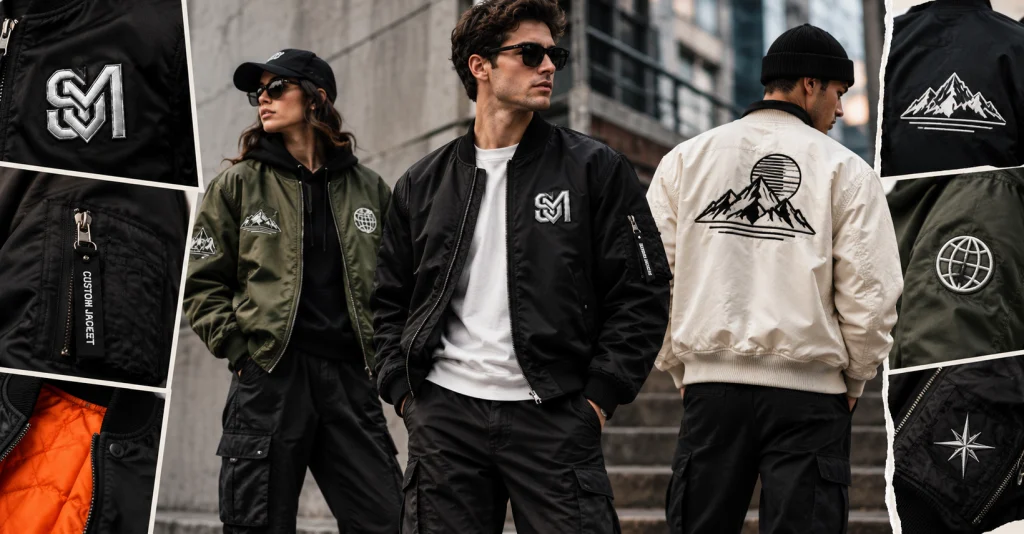
For example, you could create a black bomber jacket with a small embroidered chest logo, contrasting ribbed cuffs, and a personalised lining. Alternatively, you might prefer an oversized streetwear jacket featuring bold artwork across the back, embroidered sleeve details, and a distinctive colour scheme.
Some popular customisation options include:
- Personalised jacket colours and colour combinations.
- Custom embroidery and printed graphics.
- Company logos and brand lettering.
- Decorative patches and badges.
- Custom linings and interior details.
- Different pocket styles and placements.
- Ribbed collars, cuffs, and waistbands.
- Personalised labels and branding elements.
- Different fits, sizes, and silhouettes.
The available options depend on the jacket’s construction, fabric, production method, and order requirements.
The main advantage is that your jacket can be developed around your vision instead of forcing your ideas to fit an existing design.
Why Design Your Own Custom Bomber Jacket?
Before starting the design process, it helps to understand why personalised bomber jackets are worth considering.
1. Express Your Personal Style
Fashion provides an opportunity to express your personality without saying a word. A custom bomber jacket allows you to experiment with colours, artwork, textures, and details that reflect your individual taste.
You might prefer a minimalist design with neutral colours and subtle branding. Alternatively, you could choose vibrant colours, oversized graphics, and distinctive sleeve decorations.
Because you control the design direction, your jacket can reflect your preferences rather than simply following whatever is available in retail stores.
2. Create a Recognisable Clothing Brand
For independent fashion labels and established businesses, custom bomber jackets offer an opportunity to develop distinctive branded outerwear.
A carefully designed jacket can help communicate your brand’s identity through its colours, logo placement, materials, and overall appearance.
For example, a premium streetwear label might choose a heavyweight bomber with understated embroidery and tonal hardware. A sports-inspired clothing brand could prefer contrasting sleeves, bold lettering, and decorative patches.
Consistency is important when developing a collection. Using recognisable colours, logos, and design elements across multiple products can help establish a stronger visual identity.
3. Design Meaningful Personalised Gifts
Custom bomber jackets can also make memorable gifts for birthdays, anniversaries, celebrations, and special occasions.
You could incorporate initials, meaningful dates, embroidered names, or artwork connected to a particular memory.
A personalised jacket can be particularly appealing when the design reflects the recipient’s interests rather than relying on generic decorations.
4. Develop Matching Team or Business Apparel
Businesses, clubs, event organisers, and creative teams may use customised bomber jackets to create a consistent appearance.
A company logo on the chest, a team name across the back, or personalised details on individual garments can help distinguish members of a group.
When ordering for a team or organisation, consider the intended use, the preferred fit, the number of garments, and the available size range before confirming the design.
5. Build a Unique Streetwear Collection
Bomber jackets have a strong connection with streetwear because their shape works well with casual clothing, layered outfits, and expressive graphics.
For fashion brands, custom designs can provide opportunities to experiment with oversized silhouettes, contrasting materials, embroidered artwork, and distinctive finishing details.
Instead of creating a jacket that resembles every other product on the market, you can develop a recognisable style that supports your wider collection.
Step 1: Define Your Bomber Jacket Design Concept
Every successful custom bomber jacket begins with a clear idea.
Before choosing materials or adding artwork, decide what you want the finished jacket to communicate. This initial planning stage helps prevent unnecessary design changes later.
Start by asking yourself a few questions:
- Who will wear the jacket?
- Is it intended for everyday use, streetwear, workwear, or promotional purposes?
- Should the design look classic, sporty, minimalist, or contemporary?
- Will the jacket feature a logo, illustration, text, or decorative patches?
- What is your approximate budget?
- Are you ordering one jacket or developing a larger collection?
Your answers will help establish the direction of your design.
Create a Mood Board
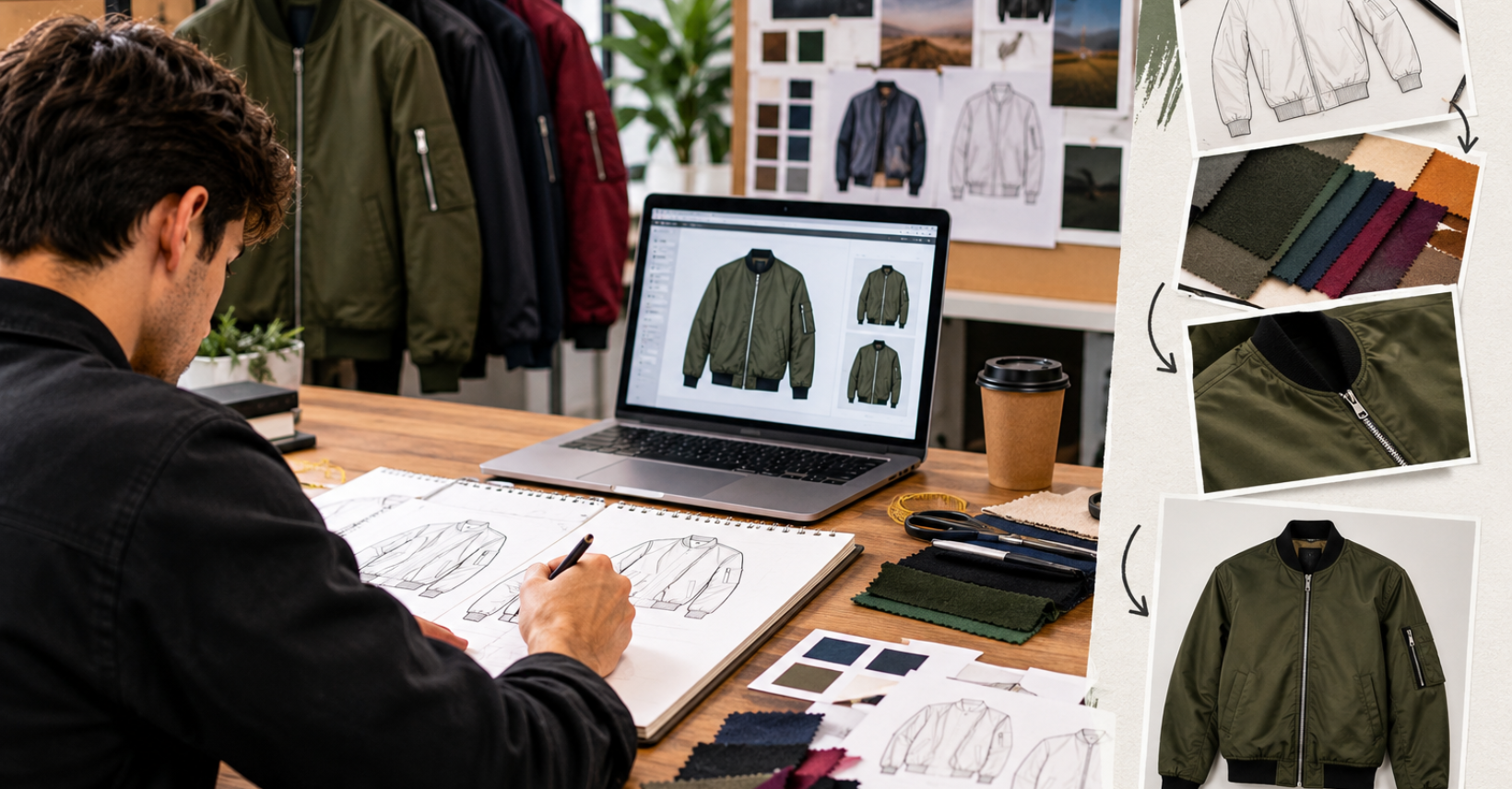
A mood board is a collection of visual references that communicates your preferred style.
It might include photographs of existing bomber jackets, fabric textures, colour combinations, embroidery examples, artwork, and hardware details.
You can create one digitally or collect images in a simple document.
For example, a premium fashion concept might combine charcoal fabric, black metal hardware, a satin lining, and small tonal embroidery. A vintage-inspired design might feature washed colours, contrasting ribbing, and embroidered lettering.
A mood board helps communicate your ideas to a designer or manufacturer, particularly when you do not have professional design experience.
Sketch Your Initial Idea
You do not need to be an expert illustrator to sketch a bomber jacket.
A simple front-and-back drawing can help you decide where the main design elements should appear.
Mark the approximate positions of the chest logo, back artwork, sleeve graphics, pockets, and any additional details.
If drawing is difficult, annotated reference photographs can serve the same purpose.
The goal is to communicate your concept clearly enough that it can be developed into a more detailed design.
Step 2: Choose the Right Bomber Jacket Style
The silhouette is one of the most important decisions when designing a custom bomber jacket.
Although classic bomber jackets share familiar features, different variations can create noticeably different appearances.
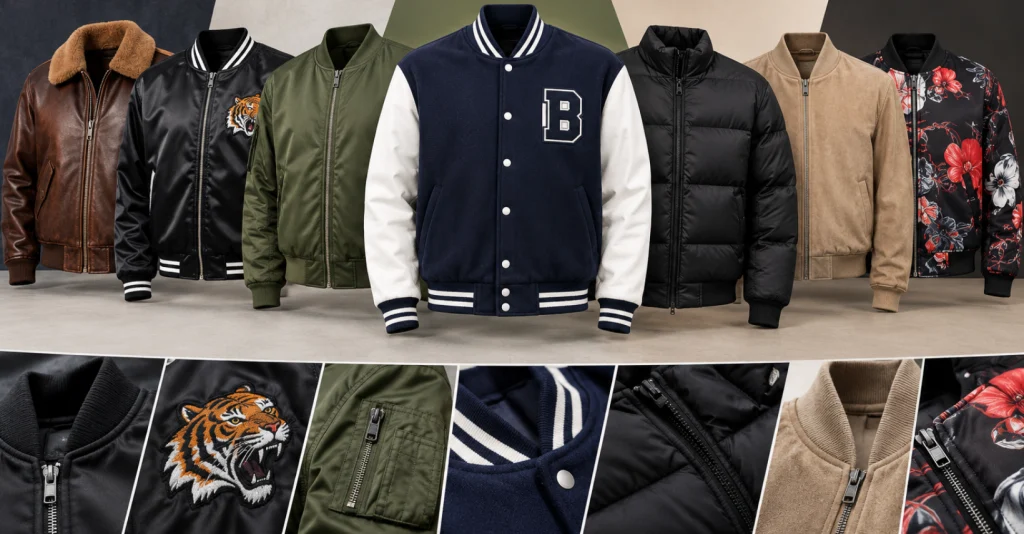
Classic Bomber Jackets
The classic bomber silhouette typically features a front fastening, ribbed cuffs, a ribbed waistband, and a relatively short body.
This style works well for everyday clothing because it can be paired with jeans, trousers, T-shirts, and casual footwear.
For a traditional appearance, consider simple colours, clean lines, and understated branding.
Oversized Bomber Jackets
Oversized bomber jackets are suitable for relaxed outfits and contemporary streetwear collections.
They generally feature a roomier silhouette and can be styled over sweatshirts, hoodies, or heavier tops.
If you are developing an oversized design, consider how the shoulder width, sleeve volume, and body length work together.
The goal is to create a deliberate silhouette rather than simply making every measurement larger.
Minimalist Bomber Jackets
Minimalist designs focus on simplicity and carefully selected details.
A neutral colour palette, clean construction, subtle branding, and coordinated hardware can create a sophisticated appearance.
This approach is particularly useful when the jacket needs to work across different outfits or appeal to customers who prefer understated clothing.
Varsity-Inspired Bomber Jackets
Varsity-inspired designs incorporate details associated with traditional collegiate outerwear.
Possible elements include contrast sleeves, embroidered lettering, chenille-style patches, decorative stripes, and prominent initials.
Although varsity jackets and bomber jackets are distinct styles, selected varsity-inspired features can be incorporated into a customised bomber design where the construction allows.
Reversible Bomber Jackets
A reversible bomber jacket offers two different looks in one garment.
For example, one side could feature a simple solid colour while the other includes a printed pattern or contrasting design.
Reversible construction requires careful planning because both sides need appropriate finishing, suitable materials, and compatible construction details.
Discuss this option with your manufacturer before finalising the design.
Design tip: Choose the overall silhouette before investing too much time in artwork. Your logo, pockets, and decorative elements should complement the jacket’s shape.
Step 3: Select the Best Fabric for Your Custom Bomber Jacket
Fabric affects a bomber jacket’s appearance, comfort, weight, durability, and suitability for different seasons.
The best option depends on how the jacket will be worn and the overall style you want to achieve.
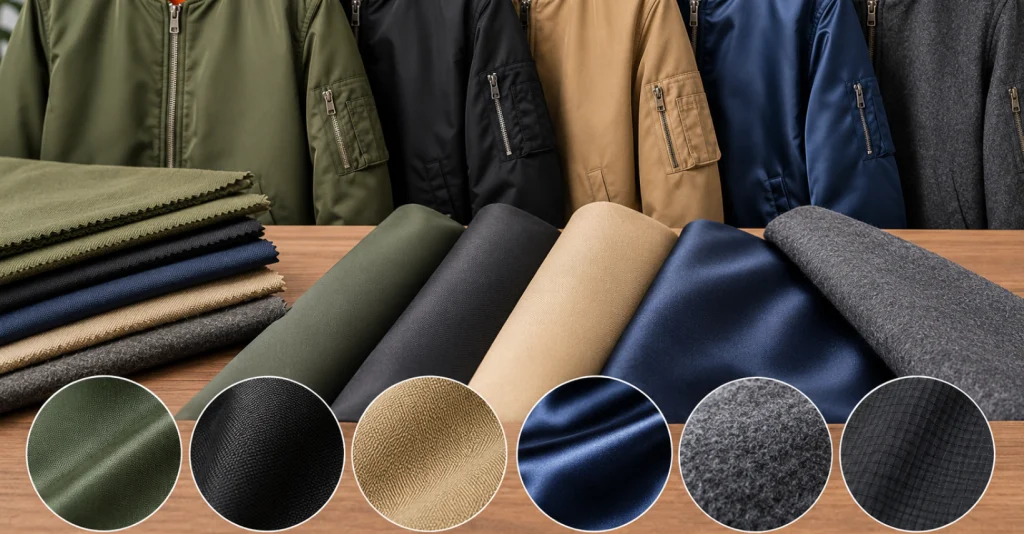
Nylon
Nylon is a popular choice for lightweight, sporty, and traditional bomber-inspired designs.
Depending on its construction and finish, it can provide a smooth surface and a relatively lightweight feel.
Nylon may suit jackets intended for everyday layering, casual wear, and contemporary outerwear collections.
If weather resistance is important, ask about the specific fabric construction and finish. Not every nylon jacket is waterproof or equally resistant to wind and rain.
Polyester
Polyester offers versatility and is available in a range of weights, textures, and finishes.
It can work well for modern bomber jackets, promotional outerwear, and designs requiring printed graphics.
The exact appearance and performance depend on the fabric specification, lining, and manufacturing process.
Cotton Twill
Cotton twill has a distinctive woven texture that can give bomber jackets a more structured, casual appearance.
It may be suitable for fashion collections that favour workwear-inspired details or a less glossy finish.
Consider the fabric weight and construction carefully, particularly if you want the jacket to retain its shape.
Leather and Faux Leather
Leather and suitable faux-leather materials can create a bold, premium-inspired bomber jacket.
These materials may work well for statement pieces, fashion collections, and designs with a more traditional aviation-inspired appearance.
Material selection can affect cost, weight, maintenance, and the techniques available for applying decorations.
For leather or faux leather, confirm that the proposed embroidery, printing, or patch application method is suitable for the specific material.
Satin
Satin offers a smooth surface and a distinctive sheen.
It can create an eye-catching appearance for fashion-focused bomber jackets, personalised gifts, and statement outerwear.
The term satin describes a type of weave rather than a single fibre, so the final properties depend on the material used.
How to Choose the Right Fabric
When comparing fabrics, consider the following:
- Season: Will the jacket be worn mainly in spring, autumn, or winter?
- Weight: Do you want lightweight outerwear or a more substantial garment?
- Appearance: Should the finish be matte, textured, smooth, or glossy?
- Comfort: Will the wearer need additional room for layering?
- Decoration: Is the material suitable for your chosen artwork or logo application?
- Maintenance: What cleaning and care requirements are appropriate?
- Budget: Does the fabric fit your target production cost?
If you are developing a clothing collection, request detailed fabric information and, where practical, review a physical sample before approving bulk production.
Step 4: Pick a Colour Scheme That Matches Your Vision
Colour is one of the first things people notice about a jacket.
A well-planned colour scheme can make a design look cohesive, distinctive, and professionally finished.
Start by choosing a main colour. Then decide whether the remaining details should complement it, contrast with it, or create a more subtle tonal effect.
Classic and Versatile Colours
Black, navy, charcoal, olive, and neutral shades are useful options for timeless bomber jacket designs.
These colours can work with a wide range of casual outfits and may suit minimalist collections or corporate apparel.
Bold and Contemporary Colours
Red, royal blue, forest green, burgundy, and brighter shades can help a jacket stand out.
Bold colours may be particularly suitable for streetwear, fashion merchandise, and statement pieces.
However, consider how the jacket’s colour will work with the intended logo and decorative elements.
Contrasting Colours
Contrast can be introduced through sleeves, collars, cuffs, waistbands, lining, zips, or embroidered artwork.
For example, a navy bomber jacket could feature white embroidery and contrasting ribbed trims.
A black jacket might combine tonal black graphics with a small silver hardware detail.
Tonal Colour Combinations
Tonal designs use different shades of the same colour family.
A dark green jacket with slightly lighter green embroidery can look understated while still featuring recognisable branding.
Similarly, black embroidery on a black jacket can create a subtle design that becomes more visible through texture and lighting.
Create a Consistent Colour Palette
For the best results, avoid adding too many unrelated colours without a clear purpose.
Choose a small group of complementary colours and use them consistently across the garment.
If you are designing for a business or clothing brand, consider incorporating your existing brand colours.
Before production, confirm how fabric colours, embroidery threads, printed artwork, and hardware finishes will be selected and approved. Different materials and manufacturing methods can affect how colours appear.
Step 5: Design Your Logo, Artwork, and Graphics
Artwork is often the most recognisable part of a custom bomber jacket.
It might represent your business, clothing label, personal interests, club, organisation, or creative concept.
Before choosing the decoration method, decide what the artwork needs to achieve.
Should it be subtle and professional? Bold and expressive? Traditional and embroidered? Or colourful and graphic?
The answer will help determine both the artwork and its placement.
Embroidered Logos
Embroidery creates a textured finish by stitching a design directly onto a suitable garment area or onto an appropriate patch.
It is commonly used for company logos, initials, small graphics, and lettering.
Embroidery can provide a distinctive appearance, particularly when the design uses carefully selected thread colours and appropriate stitch details.
However, not every artwork file can be reproduced exactly as supplied. Small lettering, intricate shapes, and fine lines may require adjustment.
Ask your manufacturer to assess the artwork before production.
Printed Graphics
Printing can be suitable for designs that include multiple colours, illustrations, gradients, or larger graphic compositions, depending on the chosen print process and fabric.
It can provide more flexibility for artwork that would be difficult or impractical to reproduce through embroidery.
The most suitable printing technique depends on the jacket material, design requirements, intended finish, and production process.
Custom Patches
Patches offer another way to personalise bomber jackets.
Depending on the design, options may include embroidered, woven, printed, or other suitable patch constructions.
Patches can be applied to selected areas of the jacket and may be useful for badges, brand emblems, decorative graphics, and lettering.
The patch backing and attachment method should be appropriate for the garment material and expected use.
Keep Your Artwork Production-Ready
A professional design file can make the production process easier.
Whenever possible, prepare a high-quality logo file in a suitable format, such as a vector file for scalable artwork.
Common vector formats include SVG, AI, and EPS. PDF files may also be suitable when they preserve the necessary vector information.
For raster images, provide a sufficiently high-resolution file.
Also consider the following:
- Make small lettering easy to read.
- Avoid unnecessarily complicated details in small logos.
- Clearly identify the intended colours.
- Separate different design elements when useful.
- Check that the artwork does not conflict with seams or zips.
- Confirm that you have permission to use the supplied artwork.
A manufacturer may need to convert or adjust the artwork before it can be used for embroidery or printing.
Step 6: Choose the Best Logo Placement
Where you place a logo or graphic can significantly affect the overall appearance of your custom bomber jacket.
A good design considers the entire garment rather than treating each decoration as a separate element.
Left or Right Chest
Chest logos are a popular choice for brands, businesses, and minimalist designs.
A small embroidered emblem can create a clean appearance without dominating the jacket.
This placement may be suitable for clothing labels that want their branding to remain visible but understated.
Back Panel
The back panel offers space for larger graphics, lettering, illustrations, and brand statements.
It can be particularly effective for streetwear designs and statement jackets.
Before finalising a large back graphic, consider how it will look when the jacket is worn and how its position relates to the shoulders, body width, and seams.
Sleeves
Sleeve decoration can add interest without overcrowding the front or back.
Possible options include small embroidered logos, text, patches, numbers, or decorative symbols.
If you plan to add artwork to a sleeve, confirm the available space and whether the design will interfere with pockets, zips, or other construction features.
Collar and Cuffs
Small decorative details around the collar and cuffs can create a more coordinated appearance.
Depending on the design, these areas might feature contrast colours, stripes, or other suitable finishing details.
However, areas with ribbing and frequent movement may require special consideration.
Interior Branding
Interior labels and lining details can provide a more discreet way to personalise a jacket.
A custom label might include your brand name, size information, or other appropriate garment details.
A distinctive lining can also contribute to the overall design, even when it is not visible while the jacket is being worn.
Create a Balanced Layout
You do not need to decorate every available area.
In many cases, one prominent design element supported by a few smaller details produces a stronger result than placing logos and graphics everywhere.
For example, a small chest logo, a larger back design, and one subtle sleeve detail may create a more balanced appearance than several competing graphics.
Prepare a front, back, and side view of the jacket so that every placement can be reviewed before production.
Step 7: Personalise the Small Details
Once the main silhouette, fabric, colour scheme, and artwork have been decided, focus on the finishing details.
These elements can make your custom bomber jacket feel more considered and distinctive.
Choose the Right Zip
The zip is both a functional component and a visible design feature.
Depending on the garment specification, you may be able to choose different colours, finishes, or styles of fastening.
The selected zip should complement the jacket’s overall design and be appropriate for the intended use.
Customise the Ribbed Trims
Ribbed collars, cuffs, and waistbands are characteristic features of many bomber jackets.
You can explore matching colours for a classic appearance or contrasting colours for a more expressive design.
Striped ribbing may also suit certain varsity-inspired or retro concepts.
Consider the Lining
The lining contributes to comfort and influences how the jacket feels when worn.
A smooth lining may be appropriate for lightweight outerwear, while a quilted lining may suit designs intended to provide additional warmth.
The right option depends on the climate, fabric, garment construction, and intended purpose.
Add Functional Pockets
Pocket placement should support the way the jacket will be used.
Depending on the design, you might consider side pockets, an interior pocket, or a sleeve utility pocket.
Think about accessibility, appearance, and how the pockets will interact with the garment’s other features.
Include Custom Labels
For clothing brands, labels can help establish a more complete product identity.
Possible options include woven labels, printed labels, or other suitable branding details.
If the jacket is intended for commercial sale, discuss the appropriate labelling requirements with your manufacturer.
Remember: Small details work best when they support the main concept. Choose finishing options that improve the design rather than adding complexity without a clear purpose.
Step 8: Get the Fit and Sizing Right
Even the most attractive custom bomber jacket can disappoint if it does not fit as intended.
Sizing deserves particular attention when ordering for multiple people or developing a clothing brand’s first collection.
Decide on the Desired Fit
Common fit preferences include:
- Regular fit: A versatile shape suitable for everyday wear.
- Relaxed fit: Additional room for comfort and layering.
- Oversized fit: A deliberately roomier silhouette associated with many streetwear styles.
- Cropped fit: A shorter body length that creates a different proportion.
These descriptions are not universal sizing standards. The actual fit depends on the garment measurements and pattern.
Review the Measurements
Before confirming your order, check the manufacturer’s size chart or measurement specification.
Important measurements may include chest width, body length, shoulder width, sleeve length, and cuff dimensions.
If possible, compare these measurements with a jacket that already fits the intended wearer.
Remember that a jacket designed to fit over a hoodie may need different proportions from one intended to be worn over a lightweight T-shirt.
Consider Your Customers
If you are creating jackets for a clothing brand, think about the people who will wear them.
Consider the size range, preferred silhouette, intended layering, and the fit your customers expect from your products.
A clearly defined sizing plan can reduce confusion when customers select their sizes.
Request a Sample When Appropriate
For a larger order or a new clothing collection, a sample can help you evaluate fit, construction, materials, and decoration before committing to full production.
Review the sample carefully and identify any changes that need to be made.
For example, you might want to adjust the sleeve length, increase the body width, change the ribbing, or reposition the logo.
If changes are required, confirm the revised specifications before authorising bulk manufacturing.
Step 9: Prepare Your Design Brief
A design brief turns your creative idea into a practical set of instructions.
It helps your designer or manufacturer understand what you want and reduces the risk of important details being misunderstood.
You do not necessarily need a professional technical pack to begin. A clear document containing your requirements can be a useful starting point.
Your custom bomber jacket design brief should include the following information.
Basic Product Information
Specify the type of jacket you want to create.
Include the intended use, preferred fit, quantity, size range, and target delivery date.
If you are developing a collection, identify the number of designs and colour variations.
Fabric and Colour Preferences
List your preferred shell fabric, lining, and colour scheme.
If you have reference photographs or fabric samples, include them where possible.
If you are unsure which material is best, explain the intended use and ask the manufacturer to recommend suitable options.
Artwork and Decoration
Attach your logo, graphics, text, or other artwork.
Clearly identify the intended placement and approximate dimensions of each design element.
Specify whether you prefer embroidery, printing, patches, or a combination of techniques.
Construction and Finishing
Describe the details that matter to your design.
These might include ribbed trims, pocket styles, zip finishes, custom labels, and lining preferences.
Separate essential requirements from optional extras so that the manufacturer understands your priorities.
Budget and Production Requirements
Provide an approximate budget or target price where possible.
Also specify the quantity you intend to order and when you need the finished garments.
The cost and production time may vary according to materials, customisation, order quantity, sampling, and manufacturing complexity.
Providing this information early helps the manufacturer assess your project more accurately.
Step 10: Review the Mockup Before Production
A digital mockup is a visual representation of how your custom bomber jacket is expected to look.
It can help you assess the design before manufacturing begins.
A mockup should show the important elements of the garment, including its main colours, artwork, logo placement, and selected decorative details.
Where practical, review the front, back, and side views.
What Should You Check?
Before approving a mockup, review the following details:
Colour accuracy: Do the main fabric and contrasting details match your intended colour scheme?
Logo placement: Is the artwork positioned correctly and appropriately sized?
Artwork proportions: Does the design look balanced on the jacket?
Text accuracy: Are all names, words, numbers, and dates correct?
Construction details: Are the intended pockets, trims, zips, and other features represented?
Overall appearance: Does the design communicate the style you wanted to achieve?
Pay special attention to small details that might be overlooked when reviewing the jacket as a whole.
For example, a logo may look attractive on its own but appear too large when positioned on the chest. A back graphic may need to be moved slightly to account for the jacket’s seams or overall proportions.
Request any necessary changes before giving final approval.
A digital mockup is a visual guide, not a guarantee that the physical garment will reproduce every colour and detail exactly. For complex designs or larger orders, a physical sample can provide a more reliable opportunity to evaluate the actual materials and construction.
Step 11: Understand the Cost of a Custom Bomber Jacket
The price of a custom bomber jacket depends on several factors.
There is no single price that applies to every design because materials, construction, decoration, and order quantities can differ considerably.
Understanding the main cost factors can help you make decisions that suit your budget.
Fabric and Material Selection
Different fabrics have different costs and manufacturing requirements.
Your choice of shell material, lining, ribbing, and other components can affect the final price.
Special finishes or less common materials may also require additional sourcing.
Design Complexity
A simple jacket with one small embroidered logo may require less production work than a garment featuring multiple large graphics, decorative patches, and intricate finishing details.
The number of custom elements and the techniques used to apply them can influence the cost.
Embroidery and Printing
Decoration costs depend on factors such as artwork size, stitch complexity, number of colours, print method, and placement.
Ask your manufacturer to assess the actual artwork rather than relying on a general estimate.
Order Quantity
The number of jackets you order can affect the price per unit.
For example, some setup costs may be spread across a larger production run. However, the actual pricing structure depends on the manufacturer and the specific project.
Always confirm minimum order requirements, sample charges, and any additional costs before proceeding.
Sampling and Revisions
A sample may help you identify issues before bulk production.
However, sampling, pattern adjustments, artwork preparation, and repeated design changes can affect both the budget and the production schedule.
How to Manage Your Budget
If you want a distinctive design without unnecessary expense, prioritise the details that matter most.
Consider starting with a suitable base fabric, a coordinated colour scheme, and one or two strong decorative features.
You can then compare optional upgrades and decide which additions provide the greatest value.
Request an itemised quotation where possible so that you understand what is included in the price.
Step 12: Choose the Right Custom Bomber Jacket Manufacturer
Selecting a suitable manufacturer is an important part of turning your concept into a finished garment.
A good manufacturing partner should understand your requirements, communicate clearly, and explain which options are practical for your design.
When comparing custom bomber jacket manufacturers in the UK, consider the following factors.
Experience With Custom Outerwear
Look for evidence that the manufacturer understands jacket construction, materials, and garment finishing.
Experience with similar projects can be helpful, particularly if your design includes complex embroidery, custom linings, or unusual construction details.
Customisation Capabilities
Confirm which options are available for your project.
Ask about fabrics, colours, embroidery, printing, patches, labels, sizing, and finishing details.
Do not assume that every manufacturer offers every customisation method.
Communication and Design Support
Clear communication can make the development process easier.
Your manufacturer should be able to explain what information is needed, identify potential production challenges, and clarify which details require approval.
If your design needs adjustment, ask whether the manufacturer can recommend practical alternatives.
Samples and Quality Checks
For projects where consistency is important, ask about sample development and quality-control procedures.
Find out how the manufacturer checks measurements, stitching, decoration, fastenings, and overall garment construction.
For bulk orders, confirm how approved samples and specifications will be used to guide production.
Production Timelines
Discuss the expected timeline before confirming your order.
The schedule may depend on fabric availability, design complexity, sample approval, order quantity, and shipping arrangements.
If you have a fixed launch date or event, communicate the deadline early and obtain confirmation of the expected delivery schedule.
Pricing and Order Requirements
Ask for clear information about pricing, minimum order quantities, payment terms, sampling, and delivery charges.
Comparing quotations on the same specifications can help you make a more informed decision.
At Bomber Jacket Makers UK, you can explore your custom bomber jacket project and discuss your preferred design, materials, and personalisation requirements.
Visit our website to learn more about our services and enquire about developing a jacket that matches your vision.
Common Mistakes to Avoid When Designing a Custom Bomber Jacket
A little planning can prevent many common design problems.
Here are several mistakes worth avoiding.
1. Adding Too Many Design Elements
Combining too many colours, logos, patches, and graphics can make a jacket look cluttered.
Instead, establish a clear focal point and use secondary details to support it.
2. Choosing Fabric Without Considering the Purpose
A fabric that looks attractive may not be suitable for the climate or intended use.
Consider weight, comfort, maintenance, and the overall construction before making your final choice.
3. Ignoring Logo Placement
Artwork that looks good in a digital file may not look equally balanced on a finished garment.
Review the artwork in context and consider the jacket’s seams, pockets, zips, and proportions.
4. Using Low-Quality Artwork
Blurry images and poorly prepared files can create difficulties during production.
Provide high-quality artwork and ask the manufacturer whether the design needs to be adjusted for embroidery or printing.
5. Overlooking Sizing
Never assume that every manufacturer’s size chart will produce the same fit.
Check garment measurements and request a sample when appropriate, particularly for larger orders.
6. Skipping Design Approval
Moving into production before confirming the final artwork, colours, measurements, and finishing details can lead to avoidable problems.
Review the complete specification and obtain written confirmation of the approved design.
7. Leaving Production Planning Until the Last Minute
Custom jackets may require material sourcing, artwork preparation, sampling, manufacturing, and delivery.
Allow sufficient time for these stages and confirm the expected schedule before committing to a deadline.
Custom Bomber Jacket Design Ideas for Inspiration
If you are still deciding what your jacket should look like, consider these creative directions.
Minimalist Black Bomber Jacket
A black bomber jacket with a small tonal chest logo, matching ribbed trims, and understated hardware offers a versatile appearance.
This design may suit premium fashion brands, everyday wear, and corporate apparel.
Vintage-Inspired Bomber Jacket
A vintage-inspired design might use muted colours, contrasting ribbing, embroidered lettering, and carefully selected decorative patches.
The overall look can be developed around a retro theme without overcrowding the garment.
Bold Streetwear Bomber Jacket
For a more expressive style, consider an oversized silhouette, contrasting colours, and a prominent back graphic.
Smaller sleeve details can complement the main design while keeping the overall layout balanced.
Corporate Branded Bomber Jacket
A corporate bomber jacket could feature a company logo on the chest, coordinated brand colours, and a simple lining.
This approach can create a consistent appearance for staff, events, or promotional clothing.
Personalised Bomber Jacket With Initials
A jacket featuring embroidered initials or a name offers a simple way to create a personal garment.
You could keep the design subtle with small chest lettering or incorporate the initials into a larger decorative composition.
Custom Bomber Jackets for Clothing Brands
Fashion labels can use distinctive fabric combinations, carefully planned graphics, custom labels, and signature colours to develop a recognisable product.
Before launching a new design, consider how the jacket will fit into the rest of your collection and whether its materials, construction, and pricing meet your customers’ expectations.
The strongest concept is not necessarily the most complicated one. A clear design with well-considered details can be just as distinctive as a garment featuring extensive decoration.
How to Care for Your Custom Bomber Jacket
Once your jacket is complete, proper care can help maintain its appearance.
However, care instructions vary according to the materials, lining, decorations, and construction.
Always follow the garment’s care label and any specific guidance provided by the manufacturer.
Here are some general considerations.
Check the care label: Confirm the recommended washing, drying, and cleaning method before cleaning the jacket.
Protect decorative details: Embroidery, patches, prints, and specialised finishes may require particular care.
Avoid unnecessary heat: High temperatures may damage certain synthetic materials, prints, linings, or trims.
Store the jacket appropriately: Keep it in a clean, dry environment and use a suitable hanger when appropriate.
Address stains carefully: Follow the recommended cleaning method for the specific fabric rather than applying strong cleaning products without checking their suitability.
For leather, faux leather, or jackets with delicate finishes, professional cleaning may be appropriate.
Following the correct care instructions can help preserve the jacket’s colour, shape, and decorative features.
Frequently Asked Questions About Designing Your Own Custom Bomber Jacket
1. How Do I Design My Own Custom Bomber Jacket?
Start by defining your concept, choosing a jacket style, selecting suitable materials, and deciding on your colour scheme. Next, prepare your artwork, choose logo placements, finalise the fit, and document the construction details. Review a digital mockup and, if appropriate, approve a physical sample before production.
2. Can I Put My Own Logo on a Bomber Jacket?
Yes, custom bomber jackets can often be personalised with logos, depending on the manufacturer’s capabilities and the garment’s material. Common options include embroidery, printing, and suitable patches. Discuss your artwork and preferred placement with the manufacturer to determine the best method.
3. What Is the Best Fabric for a Custom Bomber Jacket?
The best fabric depends on your design and intended use. Nylon and polyester can suit lightweight or sporty designs, cotton twill offers a textured appearance, satin provides a smooth finish, and leather or faux leather can create a distinctive premium-inspired look. Consider comfort, weight, maintenance, and decoration requirements before choosing.
4. Is Embroidery Better Than Printing for Custom Bomber Jackets?
Neither method is universally better. Embroidery creates a stitched, textured finish and is often suitable for logos and lettering. Printing can be useful for colourful artwork, illustrations, and larger graphics. The right option depends on the fabric, artwork, desired appearance, and production requirements.
5. Can I Customise the Front, Back, and Sleeves?
Depending on the design and manufacturing process, you may be able to customise multiple areas of a bomber jacket. Common placements include the chest, back panel, and sleeves. Check the available space and consider how seams, pockets, and zips may affect the final layout.
6. Can I Order Custom Bomber Jackets for My Clothing Brand?
Custom bomber jackets can be developed for independent labels, established fashion businesses, and private-label collections. Before placing an order, discuss your design specifications, quantity, size range, branding requirements, budget, and expected production schedule with the manufacturer.
7. How Much Does a Custom Bomber Jacket Cost?
The cost depends on the fabric, construction, design complexity, decoration methods, order quantity, and any additional customisation. Sampling and shipping may also affect the total. Request a quotation based on your actual requirements for a more accurate estimate.
8. Can I Design a Custom Bomber Jacket Without Professional Design Skills?
Yes. You can begin with reference photographs, a simple sketch, a mood board, or an existing logo. A manufacturer or designer may be able to help develop your idea into a more detailed mockup and production specification.
9. Should I Order a Sample Before Bulk Production?
A sample is often useful when ordering a large quantity or developing a new clothing collection. It allows you to assess the fit, fabric, construction, decoration, and overall appearance before proceeding with the full order. Confirm sample availability, cost, and timing with your manufacturer.
10. How Long Does It Take to Manufacture Custom Bomber Jackets?
Production time varies according to design complexity, material availability, sampling requirements, order quantity, and shipping arrangements. Ask your manufacturer for a project-specific estimate and allow time for reviewing the mockup, approving samples, and making any necessary changes.
11. Can I Create a Custom Bomber Jacket in My Brand Colours?
In many cases, you can request specific colour combinations for the main fabric and selected finishing details. Availability depends on the materials and production process. Discuss your brand colours with the manufacturer and confirm how the final colours will be approved before production.
12. What Information Should I Provide When Requesting a Custom Bomber Jacket?
Provide your preferred jacket style, fabric, colours, artwork, logo placements, size range, quantity, budget, and target delivery date. Reference images and a simple design brief can also help the manufacturer understand your requirements and prepare a more accurate quotation.
Final Thoughts: Bring Your Custom Bomber Jacket Idea to Life
Designing your own custom bomber jacket is an opportunity to combine creativity, personal style, and practical garment design.
From choosing the right silhouette and fabric to selecting colours, preparing artwork, and finalising the fit, every decision contributes to the finished product.
The key is to develop a clear concept before production begins. Think about who will wear the jacket, how it will be used, and which details matter most. Choose materials that suit the intended purpose, keep the design balanced, and review the artwork and measurements carefully.
If you are creating a personal jacket, focus on the colours, features, and details that reflect your style. If you are developing a clothing brand, consider how the jacket will represent your identity and fit into your wider collection.
Working with a suitable manufacturer can help you evaluate material options, refine your design, and turn your ideas into a practical production specification.
Ready to create your own custom bomber jacket?
At Bomber Jacket Makers UK, you can explore your design ideas and enquire about creating personalised bomber jackets for your individual style, business, team, or clothing brand.
Visit Bomber Jacket Makers UK to get started with your custom bomber jacket project and take the next step towards bringing your design to life.